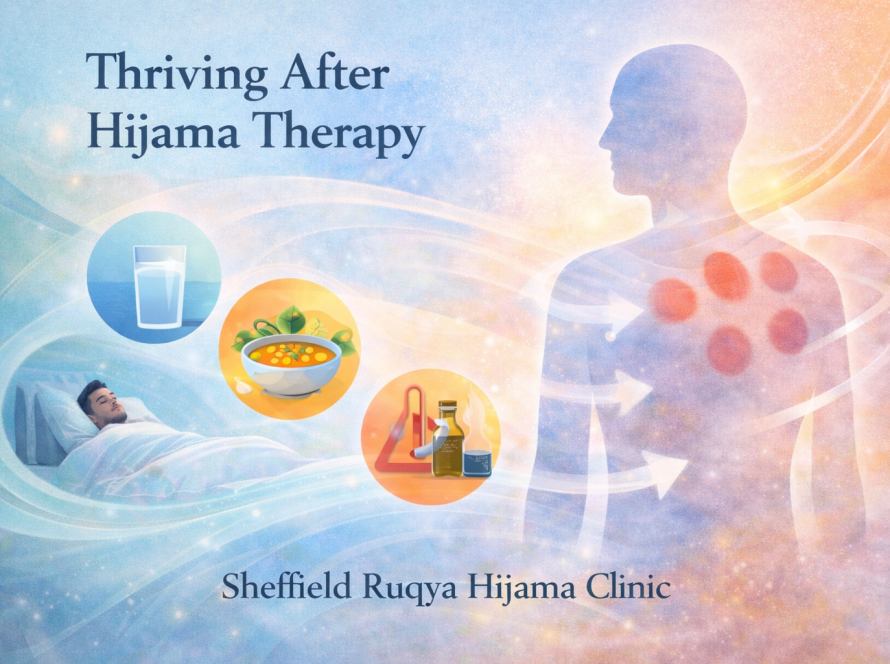
Hijama (cupping therapy) is a powerful and time-tested healing method rooted in Islamic tradition and supported by modern wellness practices. While the procedure itself is important, proper aftercare plays a crucial role in ensuring safe healing, preventing complications, and maximizing the benefits of Hijama therapy. In this guide, Sheffield Ruqya Hijama Clinic explains what you should do and what you must avoid after Hijama for optimal recovery.
Why Hijama Aftercare Is Important
After Hijama, your body enters a natural detox and healing phase. Small incisions and suction points need time to recover, and your immune system becomes temporarily sensitive. Ignoring aftercare instructions may lead to fatigue, delayed healing, or infection. Correct aftercare helps speed up skin recovery, prevent infection or scarring, support detoxification, and improve long-term therapy results.
What to Do After Hijama Therapy
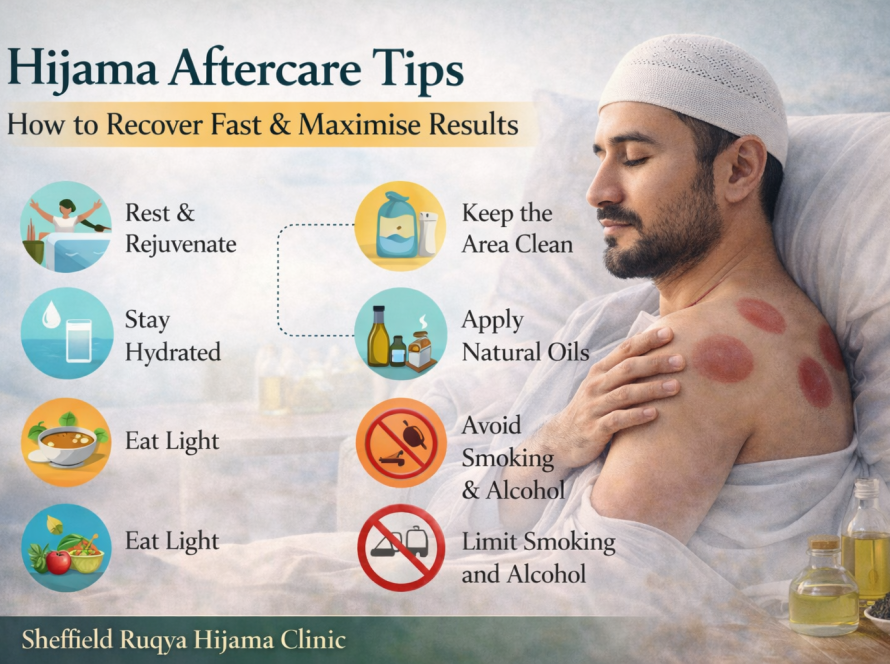
Rest Your Body
After Hijama, your body may feel relaxed or slightly tired. Take proper rest for at least 24 hours and avoid overexertion.
Stay Hydrated
Drink plenty of water or warm fluids. Hydration helps flush out toxins released during the Hijama process and supports blood circulation.
Keep the Area Clean and Dry
Leave the cupped area covered for at least 6–8 hours. After that, gently clean with lukewarm water and avoid harsh soaps.
Eat Light and Nutritious Foods
Consume light meals such as soups, fruits, vegetables, and dates. These foods support digestion and help the body heal naturally.
Apply Natural Oils (If Advised)
After 24 hours, you may apply olive oil or black seed oil to the treated area if recommended by your practitioner. This helps soothe the skin.
Maintain Spiritual Well-Being
Engage in prayer, dhikr, and recitation of the Qur’an. Hijama is both a physical and spiritual therapy, and spiritual balance enhances healing.
What to Avoid After Hijama
Avoid Showering Immediately
Do not shower for at least 12–24 hours after Hijama. Water exposure too early can increase infection risk.
Avoid Heavy Exercise
Intense workouts, gym sessions, or physically demanding tasks should be avoided for 24–48 hours.
Avoid Cold Exposure
Stay away from cold environments, cold drinks, or air conditioning directly hitting the treated area.
Avoid Junk and Processed Foods
Fast food, oily meals, caffeine, and sugary drinks can slow down the healing process and burden digestion.
Avoid Smoking
Smoking restricts blood flow and interferes with the body’s detoxification process after Hijama.
Avoid Sexual Activity (Short Term)
It is generally recommended to avoid intimacy for 24 hours, as the body needs energy for recovery.
Normal Reactions After Hijama
Some mild reactions are completely normal, including slight dizziness, temporary fatigue, mild soreness, and dark circular marks. These usually fade within a few days. However, if you experience severe pain, swelling, or signs of infection, consult your Hijama practitioner immediately.
How Long Does Recovery Take?
Most people feel better within 24–72 hours. The cupping marks typically disappear within 7–14 days, depending on skin type and circulation.
Final Thoughts
Proper aftercare is essential to get the full physical and spiritual benefits of Hijama therapy. By following the right precautions and avoiding harmful activities, you allow your body to heal naturally and effectively. At Sheffield Ruqya Hijama Clinic, we ensure safe, hygienic Hijama procedures and guide our clients through complete aftercare for long-lasting results.